View The Wilderness Downtown in Google Chrome or Safari 5.
Almost everyone likes “The Wilderness Downtown,” the interactive film by Chris Milk set to the song “We Used to Wait” by Arcade Fire. David Pescovitz at Boing Boing declares “The Wilderness Downtown”perhaps the best browser-dominating Net art piece I’ve experienced since Jodi.org’s best work more than a decade ago.” Of the 27 comments posted to Pescovitz’s piece, many go like this: “I didn’t think I would like this when I saw it a couple days ago. Just some web-tricks. However, the song and the personalization really did it for me. I’m going to send it to my brother and see what he thinks. We have so many memories of the place we grew up.”he teenage boys to whom I showed it like it. My elementary-school aged daughter likes it. My former boss likes it. My new-media-agile friends like it. I like it.
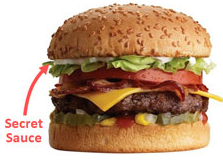
Is it a bland aesthetic, this burger to which everybody adds their own neighborhood home, their own secret sauce to make delicious? Or is “The Wilderness Downtown” popular because it’s a game-changer, creating the expectation of interactivity: that stories will work harder to meet you, quite literally, where you live.
Yes.
How can both of these things be true? Metonymy, the rhetorical trope, is the muscle powering Wilderness Downtown’s emotional punch. Metonymy is the trope of contiguity. Of desire. Metaphor draws relationship from similarity: “Achilles is a lion.” Metonymy draws relationship by approximation: “Madison Avenue scripts what we want.” “The Wilderness Downtown” is metonymy in motion. Its structure reinforces the nostalgic theme. Up to five windows open and shut in perfect synchronicity with the music. You watch the faceless, hooded proxy of yourself running through your childhood neighborhood as depicted in present-day Google Maps street view. The percussive, moody music pushes you through the experience. Unlike many pieces of eLit, there’s a beginning, middle and end. The unities of color (black, white, gray and orange) and pacing direct the eye, guide you to unify the window-fragments into a satisfying whole. You are instructed to write or doodle a postcard to the self you were when you lived there; this is the only moment where the piece slows down. The creators assume you have a lot to say. “And so I wrote a letter,” intones the Arcade Fire lyric. “I never took my true heart, I never wrote it down.”
Now you can. At the end of WD you can send your postcard along to strangers if you like, or to the Wilderness Machine, or to the Arcade Fire tour; but of course that defeats the intimacy of the conceit that you are writing to your younger self. It’s a tease, a fake. Indeed, the interactivity of this “interactive film” is limited to the moment when you enter your address; after that, you’re just watching the movie play out across the literal landscape of your childhood. “If the measure is the concept, not the interactivity,” observes Mark Marino at Writer Response Theory, “I find the piece to be a nice mashup of html5 effects, maps, and music under a creepy combo of nostalgia and surveillance crows. True, other elit is more interactive–or offers more significant interaction. This is more of the you be the star of the story — or Dora episode — genre.” “The first time I saw it a few weeks ago,” notes Dustin Stevenson in response to Marino, “I expected/hoped that the doodle I drew would manifest in the climactic moment of the film. . . . [R]eading this post left me wishing for a more deeply mutable digital object.”
Indeed, WD bets that genuine interactivity takes a back seat to nostalgia. Given the positive reception, it looks like they won the bet. Urged on by the sexy Arcade Fire refrain “aaaaaah, we used to wait,” WD is a steamy broth of conflicting desires: to be the self in the video and yet to escape out of it; to be inside that childhood landscape and also watch it destroyed by crows pummeling the ground and thrusting up into trees that occlude your view. In short, it can be anything to anybody: a perfect marketing machine (recall WD was created in part to show off the HTML5 and new Google Chrome). But is it a perfect aesthetic object? It’s too empty to be truly memorable. And yet, pretty much everybody I’ve come across likes it. A lot. The negative comments fall along the lines of: what happened to interoperability? Why can’t I run this on Firefox?
Which returns us to the question of why people like The Wilderness Downtown.Filmmaker Chris Milk: “My real motivation came from my quest for music videos to have the equally soul-touching emotional resonance that straight music does. Honestly, I’m not sure they ever can. Music scores your life. You interact with it. You listen to it in the car. It becomes the soundtrack to that one summer with that one girl. Music videos are very concrete and rigid. They don’t allow for that emotional interaction.” Unless you customize to each user. Let him plug in his own address, his own memories and desires, and the user can make the meaning. In a way, it’s the dream of every artist and reception theorist: reading is performance, its own art.
But is it art, the infinite regress of me dancing between two mirrors, watching all those arms raise and lower simultaneously? Milk has created a compelling empty screen on which to project our fantasies about our younger selves. Empty but with “boids” flying across it. Duchamp’s fountain has more instrinsic meaning. Metonymy in motion = eMotion. The secret sauce you’ll buy every time because it tastes like you.


4 Responses to Desire and eMotion: The Wilderness Downtown